terça-feira, 16 de outubro de 2012

50 razões para usar o Facebook em sua sala de aula


Quer tirar a monotonia da sala de aula? Confira 50 motivos para usar o Facebook na sala de aula e melhorar a aprendizagem dos seus alunos 

imagen-relacionada
Crédito: Shutterstock.com

O professor pode lembrar os alunos de datas e eventos importantes direitamente pelo Facebook


No início, o Facebook era uma rede social exclusivamente para estudantes universitários. Mas, com o crescimento da sua popularidade, ele acabou sendo adotado por todos, desdeestudantes de graduação até as vovós. Porém, não foi somente a popularidade que cresceu, a sua utilidade aumentou também. Os educadores estão começando a perceber o potencial que o Facebook tem dentro da sala de aula, não somente como uma distração, mas como uma ferramenta de aprendizagem colaborativa.

Enquanto algumas escolas e professores podem ser cautelosos em introduzir tal plataforma de entretenimento em sua sala de aula, outros educadores já exergaram grandes benefícios no uso de mídias sociais. Na verdade, a professora Elizabeth Delmatoff, em Portland, nos Estados Unidos, viu um aumento de 50% nas notas após a implementação de um programa de mídia social em sua sala de aula. Como o Facebook pode beneficiar a sua classe? Descubra 50 maneiras:


Razões para usar o Facebook em sua sala de aula: Diversão

Trazer o Facebook para a sala de aula é divertido. Quase todos os alunos já estão familiarizados com a rede social, e a maioria deles está animado para ser capaz de usar o site como uma forma de aprendizagem colaborativa.


Razões para usar o Facebook em sua sala de aula: É grátis

Escolas pagam milhares de dólares para sistemas de colaboração, armazenamento digital, e decomunicação, mas o Facebook faz todas essas coisas, e o melhor: de graça.


Razões para usar o Facebook em sua sala de aula: Atenção dos alunos

Muitos professores estão familiarizados com sistemas comunitários na sala de aula, mas os alunos normalmente só entram quando necessário. Usar o Facebook na sala de aula vai fazer com que os alunos prestem mais atenção, assim eles não vão precisar verificar a rede social várias vezes por dia.


Razões para usar o Facebook em sua sala de aula: Compartilhamento de calendários e eventos

Calendários e eventos são super fáceis de compartilhar na plataforma. O professor pode lembrar os alunosde datas e eventos importantes direitamente pelo Facebook.


Razões para usar o Facebook em sua sala de aula: Habilidades do século 21

Um estudo da Universidade de Minnesota, nos Estados Unidos, descobriu que os sites de redes sociais como Facebook ajudam os alunos a praticar as habilidades que eles precisam para ter sucesso no século 21.


Razões para usar o Facebook em sua sala de aula: Compartilhamento além da sala de aula

Facebook e outras ferramentas de mídia social abrem a possibilidade para que os alunos compartilhem o que aprenderam não apenas com seus colegas, mas com todo o mundo.


Razões para usar o Facebook em sua sala de aula: Recursos online convenientes

O Facebook, assim como as outras mídias sociais, é um recursos online muito conveniente. Postar links no grupo da sala de aula facilita a visualização dos estudantes e, consequentemente, o compartilhamento.


Razões para usar o Facebook em sua sala de aula: Uso produtivo

A maioria dos estudantes usa o Facebook para conversar com amigos ou passar o tempo na internet, mas usá-lo em sala de aula vai ensinar os alunos a usar a ferramenta de forma produtiva.


Razões para usar o Facebook em sua sala de aula: Ajuda aos alunos ausentes

Os estudantes que faltaram na aula podem ficar atualizados e pegar a matéria com a turma por meio do grupo da sala no Facebook.


Razões para usar o Facebook em sua sala de aula: Fórum de discussão

Os alunos que participam de atividades extracurriculares podem usar Facebook para manter contato por meio de um fórum de dicussão, deixando todos os estudantes atualizados.


Razões para usar o Facebook em sua sala de aula: Programação de atividades de aprendizagem

Registre no grupo do Facebook uma atividade diferente por dia, para utilizar como um ponto de aprendizagem, para serem apreciadas em conjunto e citadas em aula.


Razões para usar o Facebook em sua sala de aula: Estímulo da colaboração

Facebook estimula a colaboração, uma vez que todos os participantes podem falar e trabalhar juntos na rede. O que impossibilita a falta de participação em sala.


Razões para usar o Facebook em sua sala de aula: Discussão do uso adequado

Para o sucesso das mídias sociais em sala de aula, é preciso definir e discutir com alunos as formas mais adequadas para utilizar o Facebook.


Razões para usar o Facebook em sua sala de aula: Laço social

Professores e alunos podem se beneficiar do laço social criado pela interação no Facebook.


Razões para usar o Facebook em sua sala de aula: Acesso aos trabalhos extras

Os professores podem postar atribuições ou trabalhos extras apenas para os estudantes que estão necessitando, sem que haja uma maior exposição de alunos.


Razões para usar o Facebook em sua sala de aula: Material de revisão

Depois de definir as matérias da prova, você pode facilmente selecionar links, fotos, anotações e outros recursos que são essenciais para a revisão. O que é útil tanto para os professores quanto para os estudantes.


Razões para usar o Facebook em sua sala de aula: Desenvolvimento profissional

O Facebook é uma ótima ferramenta para o desenvolvimento profissional. Os estudantes não são os únicos que podem se beneficiar usando a rede social, professores também podem usá-lo para o desenvolvimento profissional.


Razões para usar o Facebook em sua sala de aula: Participação ativa

Os estudantes podem participar de palestras e usar o Facebook de forma interativa. Isso irá resultar em uma aprendizagem ativa.


Razões para usar o Facebook em sua sala de aula: Envolvimento dos familiares

Para envolver os familiares nas atividades acadêmicas, compartilhe menus de almoço, lembretes importantes, atividades, eventos, fechamento e notas especiais através de uma página no Facebook para seus alunos e familiares.


Razões para usar o Facebook em sua sala de aula: Disponibilização de aulas e notas

Os alunos podem ler as notas e as aulas em qualquer lugar onde haja Internet, logo após a publicação no Facebook.


Razões para usar o Facebook em sua sala de aula: Horário de aulas

Quer lembrar seus alunos atrasados quais são as aulas do dia? Os estudantes podem receber atualizações no Facebook por texto, permitindo que ele entre em contato antes de chegar atrasado para a sua aula.


Razões para usar o Facebook em sua sala de aula: Aprendizagem sobre a mídia social em um ambiente seguro

Ao usar o Facebook em sala de aula, você pode ensinar aos alunos sobre o uso seguro dos meios de comunicação social.


Razões para usar o Facebook em sua sala de aula: Economia de papel

Com o uso do Facebook e das outras mídias sociais, o número de papéis utilizados diminuem, o que consequentemente ajuda o meio ambiente.


Razões para usar o Facebook em sua sala de aula: Realização de pesquisas

Caso seja necessário pesquisar sobre a genealogia, por exemplo, ou fazer uma enquete informal, os alunos podem usar seus amigos do Facebook para reunir informações e realizar pesquisas.


Razões para usar o Facebook em sua sala de aula: Lembretes

Essa plataforma é ótima para criar memorandos. Os estudantes podem ser ajudados com lembretes que aparecem no seu feed de notícias do Facebook.


Razões para usar o Facebook em sua sala de aula: Compartilhamento do progresso

Quer saber como projetos dos seus alunos estão indo? Peça fotos das obras em andamento, e poste no grupo da sala.


Razões para usar o Facebook em sua sala de aula: Menos distração

Alguns professores descobriram que o uso do Facebook e outros sites de mídia social para a educação significa que os alunos estão menos tentados a usá-las inadequadamente durante a aula, ou seja, menos distração.


Razões para usar o Facebook em sua sala de aula: Alunos tímidos podem brilhar

Os alunos tímidos que de certa forma não conseguem se expressar em sala, podem se sentir mais confortáveis de contrubuir por meio do Facebook.


Razões para usar o Facebook em sua sala de aula: Compartilhamento de recursos com os colegas

O Facebook permite que os professores compartilhem, entre eles, recursos para o ensino, economizando tempo e enriquecendo a experiência dos alunos dentro da sala de aula.


Razões para usar o Facebook em sua sala de aula: Crianças e pais podem falar sobre as atividades

Quando os pais estão acompanhando o andamento das aulas, eles nunca terão que se perguntar o que aconteceu na escola, assim eles podem construir um diálogo sobre o que foi discutido em sala.


Razões para usar o Facebook em sua sala de aula: Disseminação da mídia

Professores, alunos e pais podem postar fotos, vídeos e perguntas, compartilhando diálogos e recursos no Facebook.


Razões para usar o Facebook em sua sala de aula: Projetos em grupo

Os alunos podem formar grupos para projetos de aula, compartilhar informações e reunir tudo isso com o envolvimento único nas tarefas.


Razões para usar o Facebook em sua sala de aula: Mostrar e dizer

Os estudantes não podem ser capazes de trazer o material completo para a sala de aula, mas fotos e vídeos podem ser compartilhados no Facebook.


Razões para usar o Facebook em sua sala de aula: Debates online

O Facebook permite ampliar a discussão em sala de aula, onde os alunos podem passar mais tempo na aprendizagem ativa e nos debates.


Razões para usar o Facebook em sua sala de aula: Interação com o corpo docente

Facebook quebra as barreiras, tornando os professores socialmente mais disponíveis para os alunos, o que torna o relacionamento mais fácil entre eles.


Razões para usar o Facebook em sua sala de aula: Contribuição extra de usuários

Os professores podem facilmente convidar especialistas para dialogar nas páginas do Facebook, o que provoca um novo nível de discussão e envolvimento.


Razões para usar o Facebook em sua sala de aula: Importância da criação de conteúdo

Em vez de simplesmente consumir conteúdo publicado, no Facebook os alunos podem criar, postar discussões, e utilizar os recursos.


Razões para usar o Facebook em sua sala de aula: Aprender os nomes e rostos

Com as constantes atualizações e a forte interação, os docentes podem usar o Facebook para melhorar a memória, e associar nomes e rostos da sala de aula.


Razões para usar o Facebook em sua sala de aula: Interação ao redor do mundo

Muitos professores usam o Facebook para o ensino de línguas estrangeiras, em parceria com estudantes que já falam idiomas diferentes.


Razões para usar o Facebook em sua sala de aula: Ajudar novos alunos

O Facebook é uma grande ferramenta para ajudar os estudantes a se integrar na vida social e acadêmica de uma nova escola, independentemente de escola ou faculdade.


Razões para usar o Facebook em sua sala de aula: Pesquisa com alunos

Faça perguntas no Facebook para obter respostas rápidas dos seus alunos. Os professores podem fazer isso usando ferramentas de votação no próprio site.


Razões para usar o Facebook em sua sala de aula: Feedback instantâneo

Descubra rapidamente, e de forma super simples, o que os alunos pensam de uma aula ou ideia de atividade.


Razões para usar o Facebook em sua sala de aula: Conexão em qualquer lugar

Mesmo se não puderem ver as informações na aula, o aluno pode verificar em casa ou usar o Facebook em seus dispositivos móveis para se manter atualizado em todos os momentos.


Razões para usar o Facebook em sua sala de aula: Compreensão dos interesses dos alunos

Quando os alunos fazem os seus dados de perfil disponíveis, os professores podem saber mais sobre ele, principais interesses, autores favoritos entre outras informações, permitindo a sugestão de tópicos e vídeos de seu interesse.


Razões para usar o Facebook em sua sala de aula: Aplicativos de aprendizagem

No Facebook você pode encontrar toneladas de aplicativos para a aprendizagem em sala de aula, incluindo as fórmulas matemáticas, aplicações de apresentação de slides, notas de aula entre outros.


Razões para usar o Facebook em sua sala de aula: Relacionamento

Os estudantes podem pedir cartas de recomendação, conselho de outras classes, entre outras informações por causa da comunicação informal do Facebook.


Razões para usar o Facebook em sua sala de aula: Estabelecimento na rede social

Usar o Facebook em sala vai permitir que os estudantes comecem a ver isso como uma ferramenta profissional, e consequentemente permite o estabelecimento nas redes sociais.


Razões para usar o Facebook em sua sala de aula: Aprendizagem colaborativa

Transformar o elemento social do Facebook em aprendizagem colaborativa ajuda a incentivar a prática e melhorar o envolvimento dos alunos.


Razões para usar o Facebook em sua sala de aula: Redes acadêmicas e profissionais

Ao usar o Facebook, os alunos serão capazes de descobrir as oportunidades disponíveis de networking em uma carreira específica.


Razões para usar o Facebook em sua sala de aula: Retorno

O Facebook permite que os professores fiquem longas jornadas em um escritório virtual, com lançamentos e respostas disponíveis independentemente do horário.

Fonte: http://noticias.universia.com.br/destaque/noticia/2012/07/12/950468/50-razes-usar-facebook-em-sua-sala-aula.html

quinta-feira, 11 de outubro de 2012

Estádio de Brasília é capa de software mundial de arquitetura


Edição 2013 do Autocad exibe projeto brasileiro para a Copa do Mundo


Rafael Massimino - São Paulo 


O projeto do novo Estádio Nacional Mané Garrincha vai estampar a capa da versão 2013 do software de arquitetura mais popular do mundo, o Autocad.
A escolha da arena de Brasília, palco de sete jogos da Copa de 2014, faz parte da estratégia de marketing da Autodesk, fabricante do programa, de aumentar em 30% o número de clientes no Brasil em 2012. Isso por conta do crescimento econômico e do número de obras espalhadas pelo país.


“Exceto a China, não sei se há outro lugar no mundo com tantas obras de infraestrutura, o que torna a indústria da construção brasileira muito importante”, diz Nicolas Mangon, diretor de Marketing da empresa. 


Mas além da visibilidade proporcionada pelo Mundial e do crescimento da economia brasileira, o Mané Garrincha tem outro diferencial sedutor.
Projetado pelo escritório Castro Mello Arquitetos, o estádio pretende ser o primeiro fora dos Estdos Unidos a conquistar o certificado de construção sustentável Leed (Leadership in Energy and Environmental Design) em seu grau máximo, o platinum.

O Mané Garrincha terá fachadas ventiladas para reduzir o gasto com ar-condicionado, vidros especiais para ampliar a iluminação natural, cisternas para o armazenamento de água da chuva e placas fotovoltaicas para a geração de energia elétrica.

Quando o estádio de 72 mil lugares estiver em funcionamento, o objetivo é que consuma metade da energia de um edifício convencional do mesmo porte.


“Não existe hoje, no mundo, nenhum estádio em projeto que pretenda atingir a certificação máxima”, diz Vicente de Castro Mello, coautor do projeto. “É por isso que o Estádio Nacional chama tanta atenção.”


Carbono

Um estádio verde, que será visto por uma multidão de telespectadores durante a Copa, surge como a vitrine ideal para uma fabricante de software com mais de 20 milhões de clientes nas áreas de arquitetura, engenharia e construção em vários países.


Afinal, a construção de edifícios é responsável por 40% do carbono lançado na atmosfera. Amenizar os efeitos do setor no aquecimento do planeta está na ordem do dia. 

Os governos de EUA e China, os países mais poluidores do mundo, tentam reduzir a pegada de carbono dos seus edifícios públicos exigindo certificados de construção sustentável.

Segundo Mangon, a versão 2013 do Autocad aperfeiçoou suas ferramentas de análise energética para responder a essa demanda. O programa permite que os arquitetos meçam a eficiência dos edifícios por meio de um estúdio virtual que opera em nuvem.


“Trata-se de exportar a geometria em 3D para uma ferramenta chamada green building studio, que calcula o consumo de energia para cada hora e cada dia do ano”, explica Mangon.

Certificado

O certificado Leed é baseado em um sistema de pontuação que avalia itens como energia, água e reciclagem de resíduos. Caso o edifício atinja economia de 20% nesses quesitos, pode receber a certificação simples. 

Quanto maior a eficiência, maior a pontuação e o nível do certificado, que pula para silver (prata), gold (ouro) eplatinum (platina). No país, 525 projetos estão em processo de certificação pelo GBC Brasil (Green Building Council Brasil). A lista inclui os 12 estádios da Copa de 2014.
O BNDES (Banco Nacional de Desenvolvimento Econômico e Social) vinculou o financiamento de até R$ 400 milhões para as arenas à obtenção do certificado. A maioria, no entanto, pretende obter o nível mais simples do certificado.

“No caso de Brasília, todas as reduções são acima de 50%. O salto de gold para platinum, que são quase 20 pontos, foi obtido graças à geração de energia solar”, explica Mello.

O Mané Garrincha terá placas fotovoltaicas com capacidade de gerar até 2,5 MW por ano. O suficiente para abastecer duas mil residências. O grau de certificação só é determinado depois da obra.


quarta-feira, 10 de outubro de 2012

The $100bn Facebook question: Will capitalism survive 'value abundance'?

Open-source software, shared innovation and crowd-sourced manufacturing threaten capitalism as we know it.


Is Facebook really worth $100bn - and where is this value coming from? [GALLO/GETTY]

Chiang Mai, Thailand - Does Facebook exploit its users? And where is the $100bn in the company's estimated value coming from?
This is not a new debate. It resurfaces regularly in the blogosphere and academic circles, ever since Tiziana Terranova coined the term "Free Labour" to indicate a new form of capitalist exploitation of unpaid labour - firstly referring to the viewers of classic broadcast media, and now to the new generation of social media participants on sites such as Facebook. The argument can be summarised very succinctly by the catch phrase: "If it's free, then you are the product being sold."
"We can certainly position the users of Facebook as labourers. If labour is understood as 'value producing activity', then updating your status ... creates Facebook's basic commodity."
- Christopher Land and Steffen Böhm
This term was recently relaunched in an article by University of Essex academics Christopher Land and Steffen Böhm, entitled "They are exploiting us! Why we all work for Facebook for free". In this mini-essay, they make a very strong claim that "we can certainly position the users of Facebook as labourers. If labour is understood as 'value producing activity', then updating your status, liking a website, or 'friending' someone, creates Facebook's basic commodity."
This line of argument is misleading, however, because it conflates two types of value creation that were already recognised as distinct by 18th century political economists. The distinction is between use value and exchange value. For thousands of years, under conditions of non-capitalist production, the majority of the working population directly produced "use value" - either for themselves as subsistence farmers, or as tributes to the managerial class of the day. It is only under capitalism that a majority of the working population produces "exchange value" by selling their labour to firms. The difference between what we are paid and what the market pays for the products we are making is the "surplus value".
But Facebook users are not workers producing commodities for a wage, and Facebook is not selling these commodities on a market to create surplus value.
Indeed, Facebook users are not directly creating exchange value at all, but instead communicative use value. What Facebook does is to enable this pooling of sharing and collaboration around their platform - and by enabling, framing and "controlling" that activity, they create a pool of attention. It is this pool of attention which is sold to advertisers, for an estimated $3.2bn per year, which is barely $3.79 in ad revenue per user.
We can, of course, argue that Facebook does a lot more than just selling the attention. For instance, their knowledge of our social behaviour, down to the individual level, has undoubted strategic value - for political power players and commercial firms alike. But is this surplus value really worth $100bn? That remains a speculative bet. For the moment, it's likely that the nearly one billion users of Facebook do not find the $3.79 in ad revenue per user very exploitative, especially since they do not pay to use Facebook, and are using the website voluntarily. That said, there is a price to pay for not using Facebook, in terms of relative social isolation from their peers who are users.
"Capitalism is in fact not just a scarcity 'allocation' system but also a scarcity engineering system."
Engineering scarcity
What is important, however, is that Facebook is not an isolated phenomenon, but part of a much larger trend in our society: an exponential rise in the creation of use value by productive publics, or "produsers", as Axel Bruns calls them. It is important to understand that this creates a huge problem for a capitalist system, but also for workers as we have traditionally conceived them. Markets are defined as ways to allocate scarce resources, and capitalism is in fact not just a scarcity "allocation" system but also a scarcity engineering system, which can only accumulate capital by constantly reproducing and expanding conditions of scarcity.
Where there is no tension between supply and demand, there can be no market and no capital accumulation. What peer producers are doing, for now mostly producing intangible entities such as knowledge, software and design, is to create an abundance of easily reproduced information and actionable knowledge.
This cannot be directly translated into market value, because it is not at all scarce - it's over-abundant. And this activity, moreover, is done by knowledge workers, whose ranks are steadily expanding. This over-supply threatens to make knowledge workers' jobs precarious. Hence, an increased exodus of productive capacities, in the form of direct use value production, outside the existing system of monetisation, which only operates at its margins. In the past, whenever such an exodus occurred - of slaves in the decaying Roman Empire, or of serfs in the waning Middle Ages - that is precisely the time when conditions were set for major societal and economic changes.
Indeed, without a core reliance on capital, commodities and labour, it is hard to imagine a continuation of the capitalist system.
The problem is this: internet collaboration has enabled the creation of use value in a way that totally bypasses the normal functioning of our economic system. Normally, increases in productivity are somehow rewarded, and these rewards enable consumers to derive an income and buy products.
But this is no longer happening. Facebook and Google users create commercial value for their platforms, but only very indirectly. And they are not at all rewarded for their own value creation. Since what they are creating is not what is commodified on the market for scarce goods, these value creators do not receive income. Social media platforms are exposing an important fault line in our economic system.
We have to link this emerging social economy, based on sharing creative expression, with the more authentic field of commons-oriented peer production, as expressed in the open-source and "fair use" open-content economy, which oneestimate said made up one-sixth of US GDP. There is also no doubt that one of the key ingredients of China's success so far has been the combination of the open-source - such as the country's domestic "Shanzai" economy - together with the patent-free policies that are imposed on foreign investors. This has guaranteed an open, innovative commons for much of Chinese industry.
Even as the open-source economy becomes the default way to create software, and even as it creates companies that reach a revenue of more than $1bn, such as Red Hat, the overall effect is still deflationary. It has been estimatedthat open-source annually destroys $60bn in revenues for the proprietary sector.
Thus, the open-source economy destroys more proprietary software value than it replaces. Even as it creates an explosion of use value, its monetary value decreases.
Open-source manufacturing
The same effects occur when the shared innovation commons approach is used in physical production, where it combines an open-source approach with distributed machinery and capital allocation (using techniques such as crowd-funding and social lending platforms, like Kickstarter).
For example, the Wikispeed SGT01, a car that received a five-star security rating and can attain a fuel efficiency of 100 miles per gallon (roughly 42.5 kilometres per litre), was developed by a team of volunteers in just three months. The car is being sold for only $29,000, about a quarter of what a traditional industrial automobile firm would charge, and for which it would have needed at least five years of development and billions of dollars.
Local Motors, a rapidly growing crowd-sourced car company, claims to develop automobiles five times faster than Detroit, with 100 times less capital, but WikiSpeed has achieved even faster design and production times. The WikiSpeed car is designed for modularity, using sophisticated software development techniques (such as agile, scrum, and extreme programming), an open design, and local production by garages, using distributed manufacturing techniques.
And Arduino, an open-source electronics prototyping platform, works similarly to WikiSpeed and is driving prices down in its sector. If Marcin Jakubowsky's Open Source Ecology project is successful, this will happen for at least 40 different types of machinery. In every field where an open-source manufacturing alternative develops - and I predict that they will be developed in every single field - there will be similar pricing and income pressures on mainstream economic models.
"What will happen with capitalism given social media-based exchanges, commons-based production of software and hardware, and collaborative consumption?"
'Collaborative consumption'
Another expression of the sharing economy is collaborative consumption. As Rachel Botsman and Lisa Gansky have demonstrated in their recent books - What's Mine is Yours and The Mesh, respectively - there is a rapidly growing sharing economy developing through product-service systems, sharing marketplaces and collaborative lifestyles.
For example, it's estimated that there are about 460 million homes in the developed world, and that each home has, on average, $3,000 worth of unused items available. There is clearly economic benefit to be had by using these idle resources. Much of it will not be rented, however, but swapped and bartered for free. Even the paid sharing economy will have a depressive effect on the buying of new products.
Such developments are good for the planet and good for humanity, but the larger question is: are they good for capitalism?
What will happen with capitalism given social media-based exchanges, commons-based production of software and hardware, and collaborative consumption, on an increasingly massive scale?
What happens if more and more of our time goes into producing use value - a fraction of which creates monetary value - but there is not a substantial return of income to the use value producers?
The financial crisis beginning in 2008, far from diminishing the enthusiasm for sharing and peer production, is in fact accelerating the adoption of such practices. This is not just a problem for the increasingly precarious working class, but also for capitalism itself, which is seeing its opportunities for accumulation and expansion dry up.
Not only is the world faced with a global resource crisis, it is also facing a crisis of intensive development, because value creators are increasingly income-less. The knowledge economy turns out to be a pipe dream, because what is abundant cannot sustain market dynamics.
Thus we have an exponential rise in the creation of use value, but only a linear increase in the creation of monetary value. If workers have less and less income, who can buy the commodities that are offered for sale by companies? This, in a nutshell, is the crisis of value that we are facing as humanity. It is a challenge just as big as climate change or increases in social inequality.
The meltdown of 2008 was a prefiguration of this crisis. Since the advent of neoliberalism, workers' wages have been stagnating and purchasing power was maintained only by an over-extension of credit throughout society. This was the first phase of the knowledge economy, in which only capital had access to networks, which it used to create globally coordinated multinationals.
As the knowledge society grew in size, more and more of businesses' value consisted of intangible, not physical, assets. The neoliberal stock market and its speculative excesses can be seen as a way to evaluate the amount of intangible value that is added to the stock's value by human co-operation. This bubble had to burst.
The second phase of the knowledge society, in which networks are diffused throughout society and allow productive publics to be directly engaged in peer production, creates an additional layer of problems. Add to the wage stagnation and the exodus out of wage labour that peer-based use value creation causes, and we can see that the problem is not solvable within the present paradigm. Is there a solution?
There is - but that is for the next installment. The solution involves an adaptation of capitalism to peer production, but also opens up the avenues for a transcendence of capitalism.
Michel Bauwens is a theorist, writer and a founder of the P2P (Peer-to-Peer) Foundation.
Follow Michel on Twitter: @MBauwens

The views expressed in this article are the author's own and do not necessarily reflect Al Jazeera's editorial policy.

Michel Bauwens

Michel Bauwens is a theorist, writer, and a founder of the P2P (Peer-to-Peer) Foundation.
Source:
Al Jazeera


"É a primeira crise que nasceu na periferia", diz Francisco de Oliveira


CLAUDIA ANTUNES
DO RIO
A crise econômica nos EUA e na Europa foi provocada pela "revolução" que China e Índia imprimiram ao capitalismo, provocando uma mudança na estrutura do poder econômico "sem paralelo na história", afirma o sociólogo Francisco de Oliveira, professor emérito da USP. "É a primeira crise que nasceu na periferia."
Segundo ele, não há muito o que o governo brasileiro possa fazer para conter seus efeitos perigosos, como a valorização da moeda nacional. "É como colocar água em cesto", afirma o acadêmico marxista que foi um dos fundadores do PT, do qual se afastou no início do governo Lula.
FOLHA - Como o sr. analisa o estágio atual da crise econômica nos EUA e na Europa?
FRANCISCO DE OLIVEIRA - Esta crise é a primeira que não nasceu no centro, nasceu na periferia. Daí a dificuldade de tratá-la. Ela nasceu da revolução que a China e a Índia imprimiram ao capitalismo. Esses países colocaram no mercado uma força de trabalho que o Ocidente em toda a sua história não conseguiu botar. É uma revolução extraordinária. Como no filme "Melancolia" [de Lars von Trier], é como se viesse outro planeta e explodisse a Terra.
Essa mão de obra começou a competir com a do centro?
Compete, e tente você produzir tecidos no Brasil. Não consegue.
Muitos economistas dizem que a bolha de crédito que explodiu em 2008 veio da estagnação da renda dos trabalhadores. O crédito foi para que continuassem a consumir.
O crédito dado por quem? Pela China. A China empurra trilhões na economia americana. O Fed (banco central) tem que emprestar aquilo. Passa para o sistema bancário americano, o sistema bancário foi reduzindo as taxas de juros, e sucateando o crédito. Como a renda de fato não cresce, na verdade caiu na última década, você tem um problema clássico de realização de valor [quando o baixo consumo reduz o lucro obtido com a produção]. Estão jogando dinheiro nos EUA porque do contrário liquida tudo, mas a origem da crise é asiática, não é americana.
Então não tem solução para ela?
Não tem, mas vão continuar jogando dinheiro, apagando fogo com gasolina.
Há um debate sobre se a crise assinala a decadência dos EUA como centro capitalista. Qual a sua opinião?
Não assinala a decadência como centro, mas é uma enorme novidade histórica. A China não tem nenhum interesse em torrar os EUA. Eles têm o dinheirinho deles lá. Quem são os maiores aplicadores em bônus do Tesouro americano? Primeiro a China, com um volume extraordinário [US$ 2 trilhões], depois a Índia e depois o Brasil.
Os chineses não têm interesse em entrar em uma guerra comercial ou financeira com os EUA. Se os EUA entrarem em colapso, vai todo mundo. A solução financeira é para não deixar quebrar, mas a raiz dela é uma mudança na estrutura do poder econômico mundial que é sem paralelo na história.
Essa mudança ainda não tem correspondente em outras formas de poder?
Nem no poder político nem no militar. A China é um anão militar, embora esteja acelerando. E também não tem poder político. A época do expansionismo chinês, que deu origem ao PC do B no Brasil, por exemplo, acabou.
Mas a China acabou com os antigos paradigmas, não?
Eles contribuem para quebrar paradigmas, mas não têm um novo modelo. Vai haver, mas o desenho ainda está se formatando. Os chineses têm um relevo extraordinário aí, mas ninguém sabe o que é.
E como o Brasil fica nessa situação?
Não vai acontecer nada demais. Vão ser períodos mornos, dependendo desse arranjo que está se formatando.
O sr. não prevê um bang, uma explosão?
Não, se tiver é uma surpresa extraordinária. É uma coisa que vai ter surtos de crescimento, depois retrai, modera. O dramático é que o governo brasileiro fica quase sem ter o que fazer.
As últimas medidas contra a valorização do câmbio são um placebo?
Placebo. Apesar do esforço da Dilma, não tem o que fazer na economia. Qualquer esforço aí é jogar água em cesto.
Não tem meios de frear essa enxurrada de dólares?
Não. O Brasil fica se vangloriando de ter US$ 300 bilhões em reservas. Isso é uma bobagem. Num dia os EUA derretem isso. É briga de cachorro grande. Nós já passamos do nível de basset, agora somos um perdigueiro, por aí. Não chegamos a doberman não.
http://www1.folha.uol.com.br/mundo/961378-e-a-primeira-crise-que-nasceu-na-periferia-diz-francisco-de-oliveira.shtmlFonte

segunda-feira, 8 de outubro de 2012

The miracle generation

Marwan Bishara
Marwan Bishara
Marwan Bishara is the senior political analyst at Al Jazeera.
Read an excerpt from the second chapter of Marwan Bishara's latest book, The Invisible Arab.


Editor's note: This article is the third of a series of excerpts that Al Jazeera will be publishing from The Invisible Arab: The promise and peril of the Arab revolutions. You can also read an excerpt from the preface, and from chapter one, L'Ancien Regime.
Social media for social justice
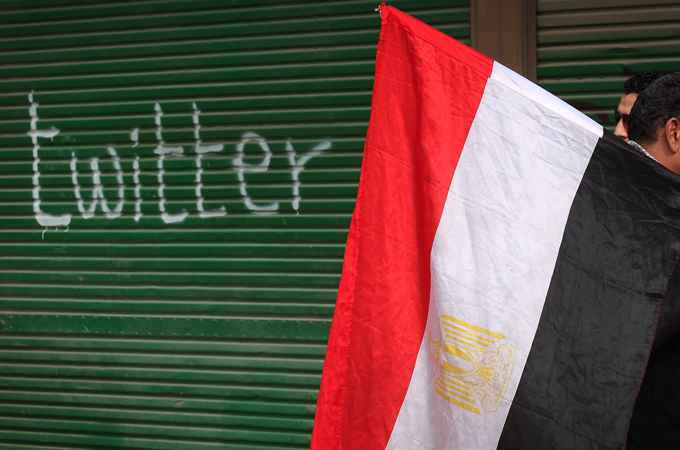
In the wake of Khaled Said's death at the hands of the Egyptian internal security service, a Facebook group entitled "We are all Khaled Said" was created and maintained by geeks and bloggers. It soon became a rallying cry for a popular movement intent on bringing those responsible to justice, be they security men or political leaders. At the beginning of 2011, there were twenty-seven million Arabs on Facebook, including six million Egyptians, comprising just more than five per cent of the population. Within a few months, two million more Egyptians joined, underlining the centrality of the medium to the changes in the country. Indeed, the countries witnessing upheavals were also the same nations witnessing the greatest increases in social media membership [PDF].
More than sixty million people in the Arab world are online. In a poll conducted across nine Arab countries, 60 per cent of the youth said they had access to a desktop computer and a comparable number had email access. Likewise,among Arab youth, four in five owned a mobile phone and a quarter of these phones were web-enabled. Despite their digital access, one in two people surveyed (albeit probably in urban areas) said they also read a newspaper daily. The numbers rise with every passing day. The fact that two-thirds of the youth spend most of their leisure time in front of a TV means they could also see an alternative, real and fictional, to their lives of misery. All this also goes to explain why more than two-thirds claimed that global citizenship was either very or somewhat important to them.
The Arab youth increasingly comprise a modern, transnational tribe that bypasses borders, religion, and social strata. As a distinctly modern social construct, the youth transcend traditional hierarchy in favour of open and pluralistic characteristics. Thanks in no small part to the information revolution and its twin byproducts "new media" and "social media", Arab youth have developed their own social and cultural codes and jargon. They share opinions and experiences freely, and, in the process, have established a diverse Arab community that is creative and innovative.

It is true that much of their time online was spent on entertainment and socialising, but even that has contributed to shaping a distinct national identity among the young. Even the banal act of voting for the best talent on a satellite television show through text messaging became the embodiment of free choice, for it was a vote that counted, unlike rigged general elections carried out by the ruling class.
Yemeni activist and 2011 Nobel Peace Prize co-winner Tawakkol Karman describes the use of social media:
The revolution in Yemen began immediately after the fall of Ben Ali in Tunisia on 14 January. As I always do when arranging a demonstration, I posted a message on Facebook, calling on people to celebrate the Tunisian uprising on 16 January. The following day a group of students from Sana'a University asked me to attend a vigil in front of the Tunisian embassy. The crowd was shouting: "Heroes! We are with you in the line of fire against the evil rulers!" We were treated roughly by the security forces, and we chanted: "If, one day, a people desire to live, then destiny will answer their call," and "The night must come to an end" - the mantra of the revolutionaries in Tunisia. The demonstration was astonishing; thousands turned up, and Sana'a witnessed its first peaceful demonstration for the overthrow of the regime. "Go, before you are driven out!" we cried.
By no means has this been a unique case. In fact it's been the norm in spreading the word among young bloggers and activists in various Arab countries.

Making and empowering individualism
The new media has had an important cultural, even sociological, role to play in patriarchal Arab societies. It helped young people break free from social constraints, it propelled them into uncharted territory, and it helped them mould a certain type of individualism. They began to enjoy an uninhibited space where they could share information and experiences, join chat rooms, and participate with one another.
Theirs is a newfound egalitarianism that contradicts the intrinsically hierarchal and inhibiting sociopolitical system. Paternalism was replaced with collegial relations; censorship was replaced by free expression. Internet citizens were not judged according to gender, ethnicity, age, or class - but on individual contributions, ability, and wit. Indeed, identities could be invented or tailored to fit personal taste or fantasy.
With no fear of retribution, Arab citizens set out to express themselves as free souls, as sovereign members of a community of individuals that is as real as the world they inhabit. They choose on the basis of free will, devoid of social and political pressures - joining, subscribing, sharing, reading, saving, deleting, working, investing, playing, as well as making friends, starting romances, joining global activism, speaking foreign languages, and communicating across borders with no limits and with no Big Brother watching over their shoulders.
They have taken routes beyond the neighbourhood alleys, have listened to music not played on local radio, have watched films not aired on local television, and have developed an imagination that went beyond the realm of the acceptable or the possible. It was only a matter of time until the free spirit that ruled the online world spilled over into the real world, putting technology at the service of people and moving the emerging diversity and consensus from the digital public space into the metropolitan square.

Geeks and dictators
For the last decade, bloggers and other citizen-journalists have gained prominence in the Arab world in relation to traditional state media and Western-dominated global media. They aimed at providing uncensored information and expanding the realm of public debate. Slowly but surely, a fusion of social media and satellite networks provided a revolutionary alternative to the dominant state and Western outlets. The improvised and occasionally misleading reporting can be traced to the second Palestinian Intifada in 2000, through the 2003 invasion and occupation of Iraq, the 2005 Hariri assassination, the 2005 Egyptian election, and the Israeli wars in Lebanon and Gaza in 2006 and 2008-2009.
The use of cell phone images, videos, and documents to provide an alternative view of the occupation of Iraq opened the floodgates of information in its later years through Twitter, blogs, Facebook, and other multimedia forums. Some of the most dramatic footage was provided by US soldiers in Abu Ghraib. In Israel's assessment of its wars in Lebanon in 2006 and Gaza in 2008-2009, the military admitted its failure in the information war in the former, but boasted of learning lessons and applying them successfully two years later. The Palestinians, who kept feeding Arab media with images and information, disagree.
At any rate, the popularisation of technology introduced new tools of empowerment and motivation that went beyond standing armies and armoured vehicles. An activist or an average protester could demonstrate during the day, circulate video clips in the evening as citizen journalists, and watch themselves at night making a difference. Armed with smart phones and laptops, protesters fought on two fronts at the same time: the global information front and the domestic political front. This was citizen-journalism [PDF] at its best.
Like the Tunisian youth, young Egyptians were more than ready when they started "revolutionary dissidence", kicking off what amounted to a countdown toward the end of the regime. Not only were Egyptian bloggers very politically active, but they also comprised the largest blogging force in the Arab world, occupying a third of the regional blogosphere.
Young Egyptians had prepared multiphased plans and backups that anticipated the security forces responses. For instance, they calculated how long and how far from a police station they needed to demonstrate in order to avoid arrest; how to manoeuvre in a way that would destabilise the security forces; how to secure multiple entries and exits; and how to devise a division of labour that would ensure that requirements from first aid to blankets were secure for the long January nights. All of that was to be coordinated and implemented online and on modest street corners. And no function was as important as spreading the word in real time in order to guarantee a maximum, orderly show of peaceful people power. This was a reenactment of events in Tunisia. The events were soon duplicated, with less intensity, in Yemen, Bahrain, Libya, and Syria, where YouTube video clips destroyed the regime's propaganda, showing the regime's thugs attacking peaceful protesters.

Cyber warfare
New media has been essential for social and political organisation. But just as it earned the admiration and interest of the people, it also drew the contempt of dictators determined to monopolise the flow of information. Tech-savvy youth became a threat, bloggers were seen as dissidents, and hackers were considered insurgents who brought down firewalls and broke barriers of fear.
The circulation among Tunisian youth of the WikiLeaks documents that revealed Ben Ali's corruption drew the attention of the Ben Ali regime, especially the damning information and reports about the crimes and excessiveness of the ruling family that were written by US diplomats, some of the regime's closest friends. Despite its despotism and nepotism, the United States saw the regime as an important regional ally and client, information that infuriated Tunisians trapped between a dictator and his cynical Western patrons.
Unable to control the spread of the leaks that were evidently blocked by the Tunisian media, government security services accelerated their assault on the internet, stealing passwords, hacking accounts, spying on activists, and blocking access to some of the more vocal opposition figures, journalists, and so on. Sofiene Chourabi, a journalist forAl-Tariq al-Jadid magazine and an outspoken blogger, was one of many harassed by authorities. He told Al Jazeera that his personal account on Facebook, which included around 4,200 friends, was hacked, and a few days later he was locked out of it completely.
As Tunisian and Egyptian governments started to treat these bloggers as political dissidents, online activists began to see themselves as such and started to act the part. Blogging was no longer a mere hobby indulged from the safety of homes but a political act that came with possible retribution. None of this was new for the Tunisian government, which for years blocked YouTube and Facebook.
These digital crackdowns were by no means specific to the Tunisian regime. As the internet sceptic Evgeny Morozov argues in his book The Net Delusion, governments, like the youth, have also learned how to use the internet in their favour. From Belarus to Israel, governments have used the internet to spy on dissidents, paralyse their movements, and build firewalls to block information, connectivity, and organisation. Indeed, some US lawmakers and political leaders argued that hackers and distributors of government electronic records, as in the case of WikiLeaks, should be treated as terrorists.
During Iran’s 2008 "Green Revolution", which followed that country's rigged elections, the government used the internet against the opposition, either shutting down certain services or breaking into networks of dissident bloggers and making mass arrests. Similarly, the Egyptian regime tried to shut down the internet for a few days, but soon discovered that it was also obliged to take down the mobile phone service used to send out videos and Tweets through alternative networks. This, in turn, paralysed the economy and hurt the country's international standing. With the outbreak of the Syrian revolution on March 15, 2011, the regime tried to learn the lessons of Egypt and Tunisia by forcing young people on the streets to give out their social network names and passwords in order to check for any anti-government sentiments.
Tunisia's besieged bloggers were helped by the hacker collective known as Anonymous, whose global activists launched "OpTunisia" to overthrow the Tunisian censor regime and, in the process, succeeded in taking down at least eight websites, including those of the president, the prime minister, the ministry of industry, the ministry of foreign affairs, and the stock exchange. By attacking these sites from outside the country, hackers were able to avoid the risk of arrest.
The information revolution and the popularisation of technology has helped level the battlefield between dissidents and dictators, while opening it up to the rest of the world to the disadvantage of rulers that obsessed about national boundaries and sovereignty. The Syrian regime attempted to black out all information from the cities and towns invaded by its forces but failed to stop the footage made available through mobile phones, which played a major role in weakening the al-Assad regime. Ironically, it was the al-Assad family, which monopolises the cell phone market through the president's cousin, Rami Makhlouf, that ensured most Syrians had a cell phone in hand during the protests.

Media clichés
Shortly after the beginning of the Arab revolution, the media began to fixate on the role of social media, ignoring other social and political factors. While important, there is no need to sensationalise the role social media played, treating it as if it were a silver bullet.
Namedropping social media networks became a cliché that reduced the totality of the transformation into revolutionary software. Though both the 2008 Iranian revolution and 2011 Egyptian revolution used new media to their advantage, only the latter succeeded in toppling the regime, while the Green Revolution failed. Why? Because of the many other factors that come to bear. Facebook doesn't organise, people do. Twitter won't govern, people will.
Western media's constant referencing of the "youth" in the abstract, all the while ignoring other components of the revolution, became a cliché intended to fascinate and entertain, not inform. Indeed, packaging youth with Western technology became a media construct devoid of all social and political components. So while the young did encompass the majority of the protesting population, women, the unemployed, blue- and white-collar labour, the middle and upper classes, and activists were all pushed into a generational pigeonhole. Such categorisation, while fascinating, doesn't say enough about the forces behind the revolution and how they would manage the future.
Regrettably, the fascinating David versus Goliath story of the people taking on oppressive regimes was translated by the Western media into a Hollywood narrative.

Enter the 'Google executive'
US officials and media executives inflated the role of a Google employee who was designated as the "hero" and brain behind the people-power demonstrations. Wael Ghonim was a young Egyptian blogger, writing under a pseudonym, who was arrested on suspicion of anti-government activity. Along with others, he helped mount the "We are all Khaled Said" Facebook page. When the authorities released him, long after the demonstrations and sit-ins were underway, he was allowed to appear on television where he was emotional, sobbing, and denying responsibility for the death of young Egyptians. The appearance backfired as the youth movement shrugged off the government's coercive tactics. But the emotional "executive" continued to sob his way to Tahrir Square where he joined a massive rally that took him in as one of its own. Ghonim, like his peers, deserve praise. He has earned his place in modern Egyptian history, but US President Barack Obama's special citation of the "Google executive" gave him, or more implicitly Google, too much credit.
In a rather flimsy attempt to highlight Google's role, aides to US Secretary of State Hillary Clinton suggested to Al Jazeera a town-hall gathering between Clinton and Egyptian bloggers and activists to be aired on the network. They were specific about how they would like it to be produced, including choosing the names of the guests and the order in which they would appear in the programme. Topping the US list was the Google executive, Ghonim. Alas, the town-hall programme never aired because Al Jazeera responded with its own journalistic prerogatives to balance the programme by putting "the town" back in the hall.
We understood that the revolutions would not have been possible without the active participation of a wide network of mobilised labour, civil society organisations, opposition parties, neighbourhood associations, those attending Friday prayers, football fans, tribes, extended families, and entire communities. However, many have embraced an overly simplistic explanation regarding the events, finding it easier to give credit to a handful of websites than to study the more complicated Arab reality from which the youth emerged. And we overemphasise the importance of online activity at the risk of downplaying the sacrifice of the all-too-often invisible activists, intellectuals, union members, and artists who died unknown and unrecognised.
Satellite media, which has been present in the Arab world for the past two decades and which covered the revolution extensively, has also had a great influence on public awareness, communication, and the mobilisation of millions across the region.
Throughout history, youth have stood at the forefront of popular upheavals and revolutions, where their active participation has been indispensable, helped by one form of connectivity or another. Since the days of word-of-mouth and pigeon-post, communication and connectivity have been prerequisites for change. People mount revolutions the way they do business, and the way they live their lives.
In his important work, History of the Arabs, Philip Hitti traces how the "Arab awakening" at the turn of the 20th century evolved thanks to the fresh participation of the relatively young, along with the help of the printing press, and the networks of trains that brought new blood into metropolitan areas. While it has become fashionable to talk about the role of the youth movement, often in simplistic and clichéd terms, the younger generation has had their influence on the course of the revolution. Some of these representations might be false, but the resulting euphoria is real and affects reality no less.
The youth have sparked a revolution not only in the public squares, but also in the minds and hearts of those long subdued by repression, broken by oppression, domesticated with proverbial carrots, or deterred by sticks. But if these old warriors were down, they weren't out. In no time, people of all types and age were awakened by the calls for change and encouraged by the will of the youth to go all the way.
Marwan Bishara is Al Jazeera's senior political analyst and a former professor of international relations at the American University of Paris.The above excerpt is from his latest book, The Invisible Arab: The promise and peril of the Arab revolutions, now available in bookstores.

Follow him on Twitter: @MarwanBishara

 
Design by Cleilton Silva | Bloggerized by Cleilton Silva - |